

Hives are one of the most common skin complaints a pharmacist sees, and almost everyone will have a flare at some point in their life. The itchy, raised patches can look alarming, especially if they appear suddenly and move around the body over a few hours, but most cases are short-lived and easy to manage with an antihistamine from the pharmacy.
This guide explains what causes hives, how they're treated, what you can do to help yourself, and the specific warning signs that mean it's time to get checked rather than wait it out.
What hives (urticaria) is and why it happens
Hives, also called urticaria or nettle rash, are itchy, raised, pink or red weals that can appear anywhere on the skin. Individual weals typically come up within minutes, last a few hours, and then fade without a trace, only for new ones to appear elsewhere. This coming-and-going pattern within a single flare is one of the more recognisable features of hives, and it's completely normal for the rash to look quite different from one hour to the next.
The weals form because certain skin cells release histamine and other chemicals, which makes small blood vessels leak fluid into the surrounding tissue. That's the same process behind hay fever and other allergic reactions, which is why hives is often (though not always) linked to an allergic trigger.
Sometimes hives is accompanied by angioedema: swelling that happens deeper in the skin, most often affecting the eyelids, lips or, less often, the throat. Angioedema tends to feel tight or sore rather than itchy, and it can take longer to settle than an individual weal. Most of the time hives and angioedema are uncomfortable rather than dangerous, but when swelling affects the throat or breathing it becomes a medical emergency, covered below.
Hives is extremely common, and most people will have at least one episode in their lifetime, often without ever needing to see a doctor about it. It can affect anyone at any age, though a first episode is particularly common in children and younger adults. Having one flare doesn't mean you're more likely to develop chronic hives later, and the two are usually thought of as separate patterns rather than one leading to the other.
Common triggers, and acute versus chronic hives
In many cases of sudden-onset hives, no clear trigger is ever found, and that's a normal outcome rather than a sign that something has been missed. Where a trigger is identified, common ones include:
- viral infections, including the common cold, which is one of the most frequent triggers, especially in children
- certain foods, most often nuts, shellfish, eggs or dairy in people with a genuine food allergy
- medicines, particularly antibiotics, aspirin and other anti-inflammatory painkillers
- insect bites or stings
- physical triggers such as heat, cold, pressure on the skin, sunlight, or exercise
- latex contact
Hives is classed as acute when it lasts less than six weeks, which describes the large majority of cases. Chronic urticaria means hives that continues, or keeps recurring, for six weeks or more. Chronic hives is less commonly linked to a specific trigger like food or an infection; in many people it happens without an obvious external cause, and the underlying reason isn't always found even after investigation.
A smaller group of people have what's called physical urticaria, where symptoms are reliably brought on by a specific physical stimulus rather than an internal trigger. Dermographism, for example, causes weals to form along lines of firm scratching or pressure on the skin within minutes, while cholinergic urticaria produces small, intensely itchy weals brought on by a rise in body temperature, such as during exercise or a hot bath. Recognising this pattern can be useful, since it points towards specific things to avoid or manage rather than an open-ended search for a cause.

Antihistamines and other treatment options
For most people, a non-drowsy antihistamine is the first and only treatment needed. Cetirizine, loratadine and fexofenadine are the options most commonly recommended, taken once daily at a standard dose, and a pharmacist can advise on which suits you if you take other medicines or have other health conditions.
If a standard dose doesn't fully control symptoms, a doctor may advise increasing the dose, sometimes up to four times the standard amount, under medical supervision. This step-up approach is a recognised part of UK urticaria management rather than something to try on your own initiative, so it should only be done with medical advice.
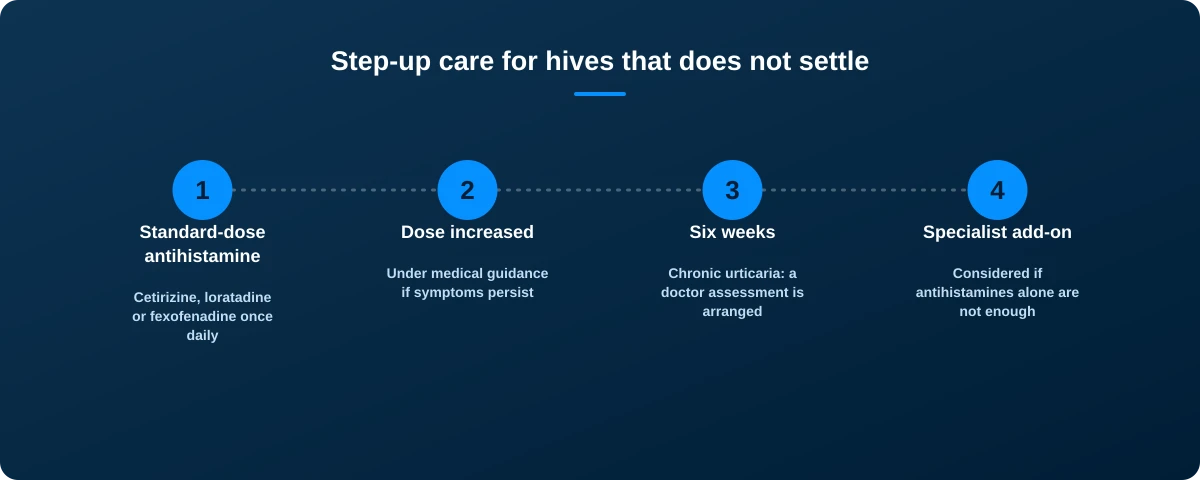
When regular antihistamines alone aren't enough, particularly for chronic urticaria, a doctor may consider add-on options such as a leukotriene receptor antagonist. Short courses of an oral steroid such as prednisolone are occasionally used for a severe flare, but they aren't suitable for frequent or prolonged use because of their side-effect profile, so they're reserved for short-term control rather than everyday management.
Self-care measures that help
Alongside antihistamines, a few practical steps can ease symptoms while a flare settles:
- wearing loose, lightweight clothing to avoid friction on affected skin
- keeping the room cool and avoiding hot baths or showers, since heat can make itching worse
- applying a cool compress or fan to particularly itchy areas rather than scratching, which can irritate the skin further
- avoiding known triggers where one has been identified, such as a specific food or medicine
- keeping a simple diary of flares and possible triggers if the cause isn't obvious, since a pattern can sometimes emerge over a few weeks
It's worth noting that hives itself doesn't need any particular diet or lifestyle overhaul unless a specific trigger has been confirmed; restricting foods without good reason to suspect them rarely helps and can make eating unnecessarily difficult.
If you've noticed that flares tend to follow a specific physical trigger, such as tight clothing, pressure from a bag strap, or getting hot during exercise, avoiding that particular trigger where practical can meaningfully cut down how often symptoms appear, alongside your regular antihistamine. Taking an antihistamine in advance of a known trigger, such as before exercise if heat reliably brings on symptoms, is a strategy some people find helpful, though it's worth checking with a pharmacist first.
When hives needs urgent or specialist attention
Most hives can be safely managed at home with an antihistamine from the pharmacy, but some symptoms mean it's time to get medical input rather than continue self-treating.
See a GP or pharmacist for an assessment if hives lasts six weeks or more (chronic urticaria), if it keeps coming back over several months, if it isn't responding to a standard-dose antihistamine, or if it's affecting your sleep or daily life. A doctor may also want to investigate further if hives develops alongside joint pain, fever, or general feeling unwell, since these combinations sometimes point to a different underlying condition that needs a specific assessment.
Call 999 or go to A&E immediately if hives is accompanied by swelling of the lips, tongue or throat, difficulty breathing or swallowing, wheezing, a fast heartbeat, dizziness, or a feeling that you might collapse. These can be signs of anaphylaxis, a severe and potentially life-threatening allergic reaction that needs emergency treatment without delay, even if the hives itself looks mild.
Living with chronic urticaria
Chronic urticaria can be frustrating to live with, particularly when no clear trigger is ever found, but the outlook for most people is good: symptoms are usually controllable with regular antihistamines, and many cases gradually improve or resolve over time, even if that can take months to a couple of years.
If you're referred to a specialist, they may run blood tests to check for an underlying cause, though in a large proportion of chronic cases none is identified, and the condition is simply managed on its own terms with a step-up antihistamine plan and, occasionally, add-on treatment. Keeping a symptom diary and staying in touch with your GP or pharmacist about how well your current dose is working makes it easier to adjust treatment as needed, rather than putting up with symptoms that could be better controlled.
Living with a condition that flares unpredictably can be genuinely wearing, particularly when it disrupts sleep or makes people self-conscious about visible skin changes. It's worth remembering that chronic urticaria isn't contagious, isn't caused by poor hygiene, and doesn't reflect anything about your overall health beyond the skin itself. With the right antihistamine plan, most people find they can get on with daily life largely as normal, even while flares continue in the background.