

Threadworms are one of the most common infections in the UK, especially among school-age children, and they're also one of the most treatable: a single tablet, taken by everyone in the household, clears most cases within a few days. Even so, the night-time itching they cause, and the thought of a worm infection, understandably worries a lot of parents and adults alike.
This guide explains what threadworms actually are, why the itching tends to strike at night, how mebendazole treatment works, and the hygiene steps that stop the infection coming straight back, along with when it's worth asking a pharmacist or GP for extra help.
What threadworms are and how they spread
Threadworms (Enterobius vermicularis) are small, thread-like white worms that live in the large intestine. Infection begins when someone swallows microscopic eggs, often without realising it, picked up from contaminated hands, food, or surfaces such as toys, door handles or bedding.
Once swallowed, the eggs hatch and the worms mature in the gut over several weeks. At night, female worms move out through the anus to lay their eggs on the surrounding skin, which is what triggers the itching that's so characteristic of the infection. Scratching then transfers eggs onto fingers and under fingernails, and from there back to the mouth, food or shared surfaces, restarting the cycle in the same person or spreading it to someone else.
The eggs are extremely resilient: they can survive on clothing, bedding and other surfaces for two to three weeks, which is one of the main reasons threadworms spread so easily within households, nurseries and schools, and why reinfection is common if hygiene measures are skipped.
Threadworms are thought to be the most common worm infection in the UK, and they're found worldwide. Anyone can be affected, but children between about 5 and 10 years old are the group most often diagnosed, largely because close contact in classrooms and playgrounds, combined with less consistent handwashing, gives the eggs plenty of opportunities to spread. Having a school-age child with threadworms doesn't reflect on hygiene at home; it simply reflects how easily the infection passes between children.
Symptoms of threadworm infection
The main symptom is intense itching around the anus, usually at its worst at night when the worms are most active. It can be uncomfortable enough to disturb sleep, sometimes for the whole family. In girls and women, the itching and irritation can also affect the vagina, since worms can occasionally migrate there instead.
You may also notice small, white, thread-like worms on the skin around the anus, in the stool, or on bedsheets shortly after the person has been asleep. Children in particular may become more irritable, restless or tired from disturbed sleep, and some develop bedwetting that wasn't previously a problem.
Not everyone with threadworms has obvious symptoms: some people carry the infection without ever noticing, which is part of why treating the whole household together, rather than only the person with symptoms, makes such a difference.
Diagnosis is usually straightforward and based on what you see: the worms themselves, or the pattern of night-time itching, are often enough for a pharmacist to confirm what's going on without further tests. If there's genuine doubt, a simple sticky-tape test (pressing clear tape against the skin around the anus first thing in the morning, then having it looked at) can pick up eggs that aren't visible to the naked eye, though this is rarely needed in practice.
Treating threadworms: mebendazole and how it works
The standard treatment for threadworms in the UK is mebendazole, available from a pharmacy without a prescription for most adults and children over 2, and sometimes used off-label for younger children when a clinician judges it's needed. It's usually taken as a single 100mg dose and works by stopping the worms from absorbing the sugars they need to survive, so they die off over the following day or two.
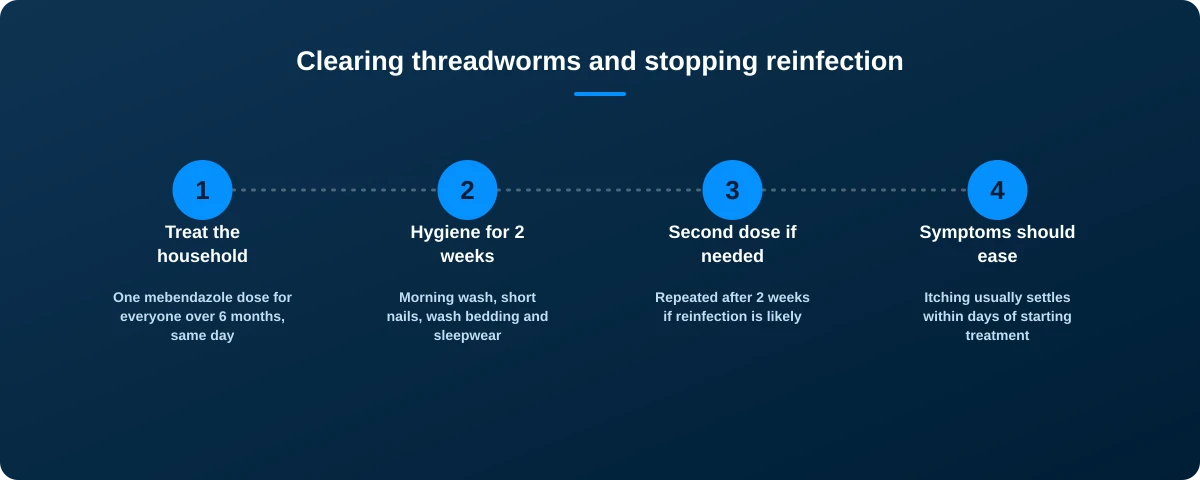
One important thing to know is that mebendazole kills the adult worms but not the eggs already present on the skin or in the environment, so a second dose after two weeks is often advised, particularly if reinfection is likely, to catch any worms that have since hatched. The patient information leaflet will confirm whether a repeat dose is recommended for the product you've been given.
Mebendazole is the treatment most commonly used for threadworms in the UK because it's well tolerated, works with a single dose, and has a long track record of safe use in both adults and children over 2. It's specific to threadworm-type infections, so it isn't the right choice if a different kind of parasite is suspected; a pharmacist can advise if your symptoms don't fit the usual threadworm pattern described above.

Treating the whole household and preventing reinfection
Because threadworm eggs spread so easily, it's standard practice to treat everyone in the household aged over 6 months on the same day, even if they don't have symptoms. Skipping someone who appears unaffected is one of the most common reasons threadworms keep coming back.
Alongside treatment, strict hygiene measures for around two weeks help stop eggs re-entering the body or spreading further:
- shower or wash around the anus each morning rather than at night, to remove any eggs laid overnight
- keep fingernails short and scrub underneath them, and discourage nail-biting and scratching
- wash hands and scrub under nails before eating, after using the toilet, and after nappy changes
- wash sleepwear, sheets and towels on the first morning of treatment, and vacuum or damp-dust bedrooms
- avoid shaking bedding or towels in the air, since this can spread eggs into the room
Children being treated for threadworms don't usually need to be kept off nursery or school, since the infection is mild and treatment starts working straight away; the priority is simply following the hygiene routine consistently at home to bring the cycle to an end. Sharing towels and flannels is best avoided while anyone in the household is being treated.
Threadworms in pregnancy, babies and special situations
Mebendazole isn't usually recommended during pregnancy, particularly in the first trimester, because there isn't enough safety data to confirm it's risk-free. Instead, pregnant women are generally advised to rely on the hygiene measures above for around six weeks, which is enough time to break the egg-to-adult-worm cycle without medicine, unless a midwife or GP suggests otherwise for a specific reason.
The same caution applies to babies under 6 months, who are managed with hygiene measures alone rather than mebendazole. If you're breastfeeding, or unsure whether treatment is appropriate for a baby or during pregnancy, a pharmacist or GP can advise on the safest approach for your situation, and can help you weigh up the timing if symptoms are causing significant discomfort.
Anyone with a long-term health condition, or taking regular medicines for something else, should also mention this to a pharmacist before starting mebendazole, simply so they can confirm there's nothing about your individual situation that changes the usual advice.
When to see a doctor or pharmacist
Most threadworm infections clear up quickly with a pharmacy-bought mebendazole dose and two weeks of hygiene measures, so a GP appointment usually isn't necessary. It's worth asking a pharmacist or GP for advice if symptoms haven't improved after a second treatment dose, if the infection keeps returning despite following the hygiene steps carefully, or if you're pregnant, breastfeeding, or treating a baby under 6 months.
You should also get checked if you notice symptoms that don't fit the usual pattern, such as persistent abdominal pain, blood in the stool, or unexplained weight loss, since these aren't typical of threadworms and may need investigating for another cause. A pharmacist can usually confirm quickly whether what you're seeing is consistent with threadworms or whether further assessment is needed.