

Weight loss: the biggest reversible factor
If there is one lifestyle change with genuinely good evidence behind it, it is this one. Obesity is the single most common reversible cause of low testosterone in men. Fat tissue, particularly around the abdomen, converts testosterone into oestrogen through an enzyme called aromatase, and carrying excess weight is also linked to insulin resistance, both of which push testosterone down. The relationship works the other way too: low testosterone makes it easier to gain fat and harder to build muscle, so the two can reinforce each other over time, sometimes called a vicious cycle by endocrinologists.
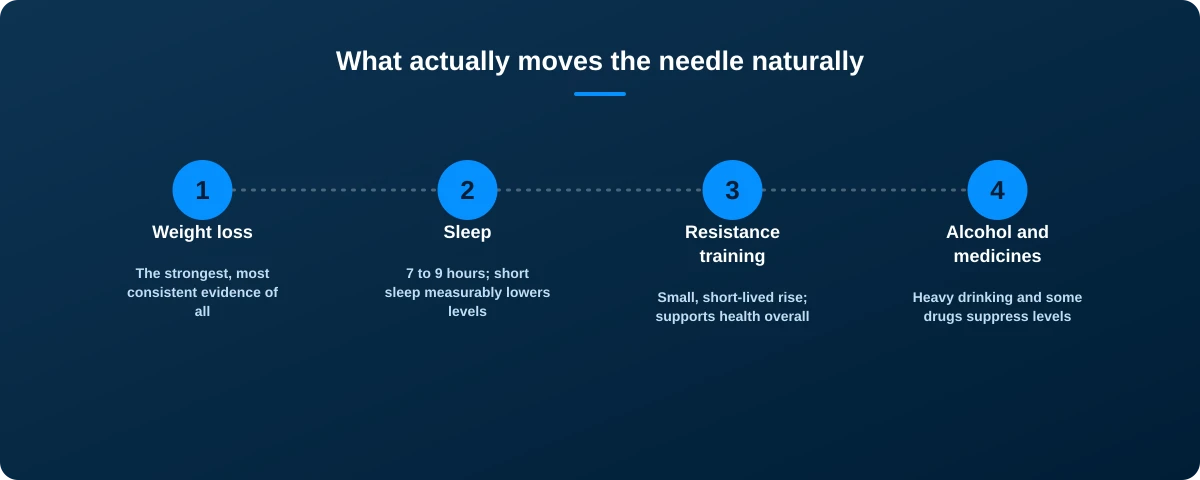
The useful part is that this is reversible for many men. Studies of men who lose a meaningful amount of weight, through diet, increased activity, or in some cases structured weight-loss treatment, consistently show a rise in testosterone levels. The effect tends to be larger in men who started with a higher body mass index, and it is not an overnight change: most of the benefit shows up over months, not weeks, as fat mass and insulin sensitivity gradually improve. It is not a guarantee for every individual, and your clinician will advise based on your individual circumstances, but of everything covered in this article, weight loss has the most consistent data behind it. For men whose main driver of low testosterone is excess weight, this single change often matters more than anything else on this list.
Sleep and testosterone
Testosterone is produced in pulses that are closely tied to your sleep cycle, with the biggest surge happening during the deeper stages of overnight sleep. Cut that sleep short and the hormone has less time to be made. Research on healthy young men restricted to around five hours a night for just one week found testosterone levels dropped by 10 to 15%, roughly equivalent to ageing ten to fifteen years in hormonal terms. Adults are generally advised to get 7 to 9 hours of sleep a night, and this is one of the few areas where the advice for testosterone and the advice for general health line up exactly.
It is not only how long you sleep but how disrupted it is. Undiagnosed obstructive sleep apnoea, which is more common in men carrying extra weight around the neck and abdomen, fragments sleep and is independently linked to lower testosterone. If you snore heavily, wake up gasping, or feel unrefreshed no matter how many hours you spend in bed, that is worth raising with a GP before assuming the fix is simply "more sleep". Simple habits also help: a consistent bedtime, a dark and cool room, and limiting screens and caffeine in the evening all support the kind of deep, uninterrupted sleep that testosterone production depends on.
Resistance training and exercise
Lifting weights produces a short-lived rise in testosterone in the hours after a session, particularly with compound movements that work large muscle groups, such as squats and deadlifts. This acute spike is real, but it is also brief, and it is not the same thing as a lasting increase in your baseline level. Where resistance training helps more durably is indirectly: it builds muscle, supports fat loss, and improves insulin sensitivity, all of which support healthier hormone levels over time, as well as general strength and wellbeing.
Excessive endurance exercise, on the other hand, particularly very high training volumes combined with inadequate calorie intake, has been associated with lower testosterone in some athletes, sometimes called an overtraining effect. The practical takeaway is balance: regular resistance training two to three times a week, alongside moderate cardiovascular exercise, supports overall hormonal health, but exercise alone will not correct a genuine deficiency, and it should not be treated as an alternative to getting tested if you have symptoms.
Alcohol, medicines and other things that lower testosterone
Several common, everyday factors work against you without you necessarily realising it. Regular heavy alcohol intake is toxic to the testicular cells that produce testosterone and also raises oestrogen levels in the body, a combination that lowers testosterone over time. Cutting back to within UK low-risk drinking guidelines is a straightforward change with a real hormonal upside for men who drink heavily, and the effect on levels can be noticeable within weeks of cutting back.
Several medicines are also known to suppress testosterone, including opioid painkillers taken regularly, some medicines used for mental health conditions, and long-term steroid tablets taken for inflammatory conditions. Separately, misuse of anabolic steroids, taken without medical supervision to build muscle, causes a sharp drop in the body's own testosterone production that can persist for months after stopping, because the body senses artificially high levels and shuts down its own signalling in response. If you take a regular medicine and are concerned it may be affecting your hormone levels, do not stop it yourself; speak to the prescriber, because the condition it treats may carry risks that outweigh the hormonal effect.
How much difference lifestyle really makes
It is worth being realistic about scale. For a man with mildly low-normal testosterone whose main issue is excess weight, poor sleep and heavy drinking, addressing all three together can produce a meaningful rise, sometimes enough to resolve symptoms without any medication. For a man with a confirmed, clinically significant deficiency caused by a problem with the testicles or the pituitary gland, the honest picture is different: lifestyle changes support general health and may modestly help, but they do not correct the underlying cause, and relying on them alone can mean living with symptoms for longer than necessary while the actual problem goes untreated.
This is also where unregulated "testosterone booster" supplements fall down. Trials of popular ingredients such as fenugreek, tribulus terrestris and D-aspartic acid have generally failed to show a meaningful testosterone rise in men with normal levels. The exception is correcting an actual deficiency, such as low zinc or vitamin D, where supplementing can help restore levels toward normal in men who were genuinely short of that nutrient, but that is a correction, not a boost beyond your normal range. Spending money on a supplement cabinet full of boosters is rarely a substitute for the changes covered above, and in some cases it can delay a man seeking the blood test he actually needs.
When lifestyle is not enough: testing and TRT
If you have tried the changes above for several months and still have symptoms such as low libido, persistent fatigue, erectile difficulties, low mood or loss of muscle mass, the next step is a blood test, not another supplement. A GP or private clinician can arrange a morning testosterone test, usually alongside LH and FSH, to see whether your level is genuinely low and, if so, whether the cause sits in the testicles or further up in the pituitary signalling. You can read more about who should consider testing and what the results mean, including why timing and repeat testing matter for an accurate result.
A confirmed, symptomatic low testosterone level caused by genuine hypogonadism is a medical diagnosis, and the established treatment for it is testosterone replacement therapy (TRT), not a lifestyle programme alone. TRT may be considered for some patients once hypogonadism is confirmed, but suitability depends on your individual results, medical history and the cause identified, which is why it is prescribed and monitored by a clinician rather than self-managed. Lifestyle changes and TRT are not an either-or choice either: clinicians generally recommend keeping up healthy weight, sleep and alcohol habits alongside treatment, since they support how well TRT works and how you feel on it. Visit our Men's Health hub for more on diagnosis and treatment options.