

Low testosterone, or hypogonadism, causes a recognisable cluster of symptoms, but almost every one of them can also be explained by something else entirely. That overlap is exactly why "I have low testosterone symptoms" and "I have low testosterone" aren't the same statement. This guide sets out what to actually watch for, who is more likely to be affected, and when it's genuinely worth booking a test rather than waiting it out.
Common symptoms of low testosterone
The symptoms most commonly linked to low testosterone include:
- Persistent fatigue or low energy, even after adequate sleep
- Reduced sex drive (libido)
- Erectile difficulties
- Low mood, irritability or reduced motivation
- Difficulty concentrating, sometimes described as "brain fog"
- Reduced muscle mass and strength
- Increased body fat, particularly around the waist
- Reduced body or facial hair growth
- Occasional hot flushes or night sweats
- Poor-quality sleep
Any one of these on its own is common and usually unremarkable. What tends to prompt a conversation with a clinician is a cluster of several, persisting for weeks rather than days, and genuinely affecting day-to-day life rather than being a passing bad patch. It's also worth paying attention to how these symptoms interact with each other, since low testosterone rarely shows up as a single isolated complaint. Fatigue that leads to less exercise, which contributes to weight gain, which itself lowers testosterone further, is a recognisable pattern that can make it hard to pin down which symptom came first.
Why symptoms alone aren't enough to diagnose it
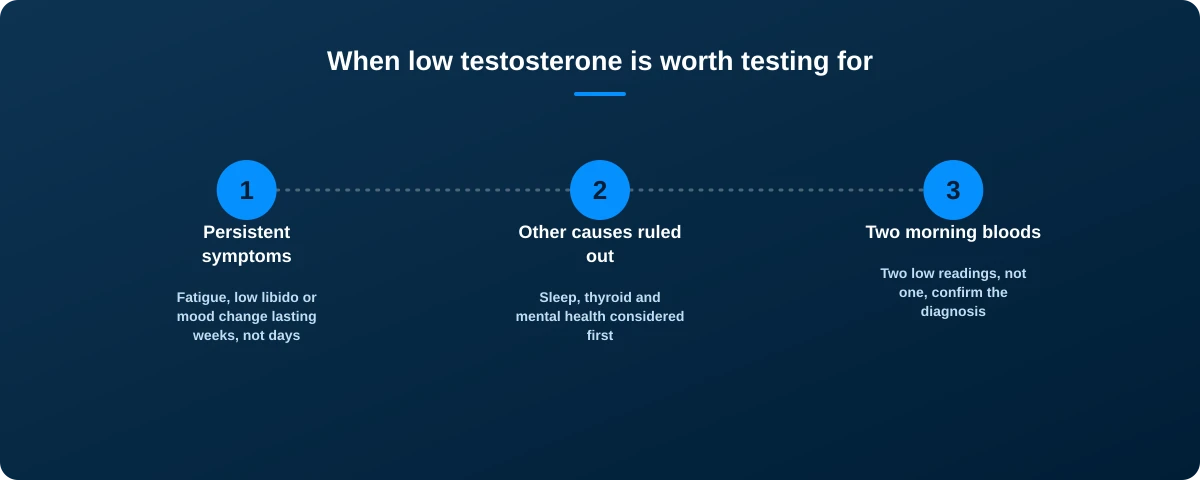
Fatigue, low libido, low mood and reduced muscle mass can all be symptoms of low testosterone, but they overlap heavily with poor sleep, stress, depression, thyroid problems and simply getting older. That overlap is exactly why a responsible clinician will not diagnose low testosterone on symptoms alone. A biochemical diagnosis, usually two early-morning total testosterone readings below the laboratory reference range, is what separates a genuine case of hypogonadism from symptoms that have a different, non-hormonal cause and a different fix.
This works both ways. A result inside the normal range doesn't automatically rule out treatment being worth discussing if your symptoms and wider clinical picture are compelling, and a low-normal reading in isolation doesn't automatically mean treatment is needed either. UK guidance treats bloods and symptoms together, interpreted by a clinician, rather than as a number you can read off a lab report and act on yourself.
Who is more likely to have low testosterone
Testosterone naturally declines gradually with age, but a clinically low level isn't a normal or inevitable part of ageing for most men. Certain factors make it more likely:
- Obesity, metabolic syndrome or type 2 diabetes
- Long-term use of opioid painkillers or long-term corticosteroid use
- A history of testicular problems, including undescended testes, mumps orchitis, injury, or previous chemotherapy or radiotherapy
- Pituitary conditions or a significant head injury
- Certain genetic conditions affecting the testes
- Chronic illness or significant unexplained weight loss
If any of these apply to you alongside relevant symptoms, it's reasonable to raise testing earlier rather than waiting to see if things settle on their own. It's also worth mentioning any of these risk factors explicitly at your consultation, even if you're not sure they're relevant. A clinician builds a much more accurate picture from a full history than from symptoms described in isolation, and something you might consider minor, such as a testicular injury years ago or a period of significant weight loss, can genuinely change how your case is assessed.
When it's worth arranging a test
As a general guide, testing is worth arranging if you have two or more of the symptoms above, they've persisted for several weeks, and they aren't clearly explained by something else, such as a stressful period, poor sleep, or a medicine you're taking. If you have any of the risk factors listed, it's reasonable to test sooner rather than waiting for symptoms to become severe.
Timing matters for accuracy. Testosterone follows a daily rhythm and is highest in the morning, which is why testing is always done on an early-morning sample. It's also worth avoiding testing during an acute illness, immediately after a poor night's sleep, or during a period of unusually high stress, since these can cause a temporary dip that doesn't reflect your usual level.
It's also worth being honest with yourself about how long symptoms have actually been present. Many men only join the dots after several months, looking back and realising fatigue or low mood had crept in gradually rather than arriving suddenly. If that sounds familiar, it doesn't mean you've left it too late; it just means the timeline you give your clinician is worth thinking through properly rather than estimating on the spot.
What a testosterone blood test actually involves
A first test is usually a single early-morning total testosterone reading. If that comes back low, it's repeated on a second morning to confirm it, alongside a wider panel covering hormones that regulate testosterone production, plus general safety markers. Our full guide to TRT blood tests sets out exactly what's included and why. Private UK testing is typically arranged through a home finger-prick or venous kit, with results back within 3-5 working days.
It's worth knowing that a single low reading is never treated as a final answer. Testosterone naturally fluctuates from day to day, and factors like a poor night's sleep, a recent illness or significant stress can all push a single result down temporarily. The second confirmatory sample exists precisely to filter out this kind of noise, so don't be alarmed if a clinician asks you to repeat a test rather than acting on the first result alone.
What happens after a low result
A low result doesn't automatically mean starting TRT. Your clinician reads it alongside your symptoms and the rest of your blood panel, and will also want to discuss other contributors that are worth addressing regardless of the testosterone result, such as sleep quality, weight, alcohol intake and undiagnosed sleep apnoea. Where treatment is appropriate, the decision is made together with you, not handed down from a single number.
It's also worth knowing what happens if your result comes back low-normal rather than clearly low. This grey area is common, and it's exactly where a clinician's judgement matters most: two men with an identical borderline reading can have genuinely different next steps depending on how significant their symptoms are, what else shows up in their wider panel, and their overall health picture. There's no shortcut around that individual assessment, which is part of why a proper consultation, not just a lab report, is the safe way to interpret any result.
Frequently asked questions
What are the most common symptoms of low testosterone?
Persistent fatigue, reduced libido, low mood, difficulty concentrating, reduced muscle mass and increased body fat are among the most commonly reported symptoms, though each can also have other causes.
Can symptoms alone tell you if you have low testosterone?
No. Symptoms overlap heavily with poor sleep, stress, depression, thyroid problems and normal ageing, so a diagnosis needs two low early-morning blood readings alongside your symptoms, not symptoms on their own.
Who should consider testing for low testosterone?
Anyone with several persistent, unexplained symptoms, and especially men with obesity, type 2 diabetes, a history of testicular problems, or long-term opioid or corticosteroid use, since these all raise the likelihood of a genuinely low level.
Is there a best time of day to test testosterone?
Yes, always an early morning sample. Testosterone follows a daily rhythm and is highest in the morning, so testing later in the day can give a misleadingly low reading.
What happens if my testosterone comes back low?
Your clinician interprets it alongside your symptoms and the rest of your blood panel, and discusses other relevant factors like sleep and weight. Treatment isn't automatic; it's a decision made together based on your full picture.
Sources & further reading
- National Institute for Health and Care Excellence (NICE). Clinical Knowledge Summaries. cks.nice.org.uk
- British National Formulary (BNF). UK medicines guidance. bnf.nice.org.uk
- electronic medicines compendium (emc). Summaries of Product Characteristics. medicines.org.uk/emc
Farmeci reviews its clinical content at least annually and whenever major UK guidance changes.